Prompt transferability
VerifiedThese cinematic prompts use standard film language that works across multiple AI video models, not just HappyHorse
A collection of 15+ cinematic AI video prompts organized by genre, with camera movement and lighting tips to achieve film-quality results from AI video models.
Key facts
These cinematic prompts use standard film language that works across multiple AI video models, not just HappyHorse
Prompts are built on real cinematography principles including shot composition, camera movement, and lighting design
The same prompt will produce different results each time and across different models; these are starting points for iteration, not guaranteed output specifications
Get 50+ tested AI video prompts, comparison cheat sheets, and workflow templates delivered to your inbox.
Mixed signal
Prompts are transferable templates based on common AI video generation patterns. Results may vary across models.
Readers should expect careful wording here because public reporting confirms the topic, while some product details still need cautious treatment.
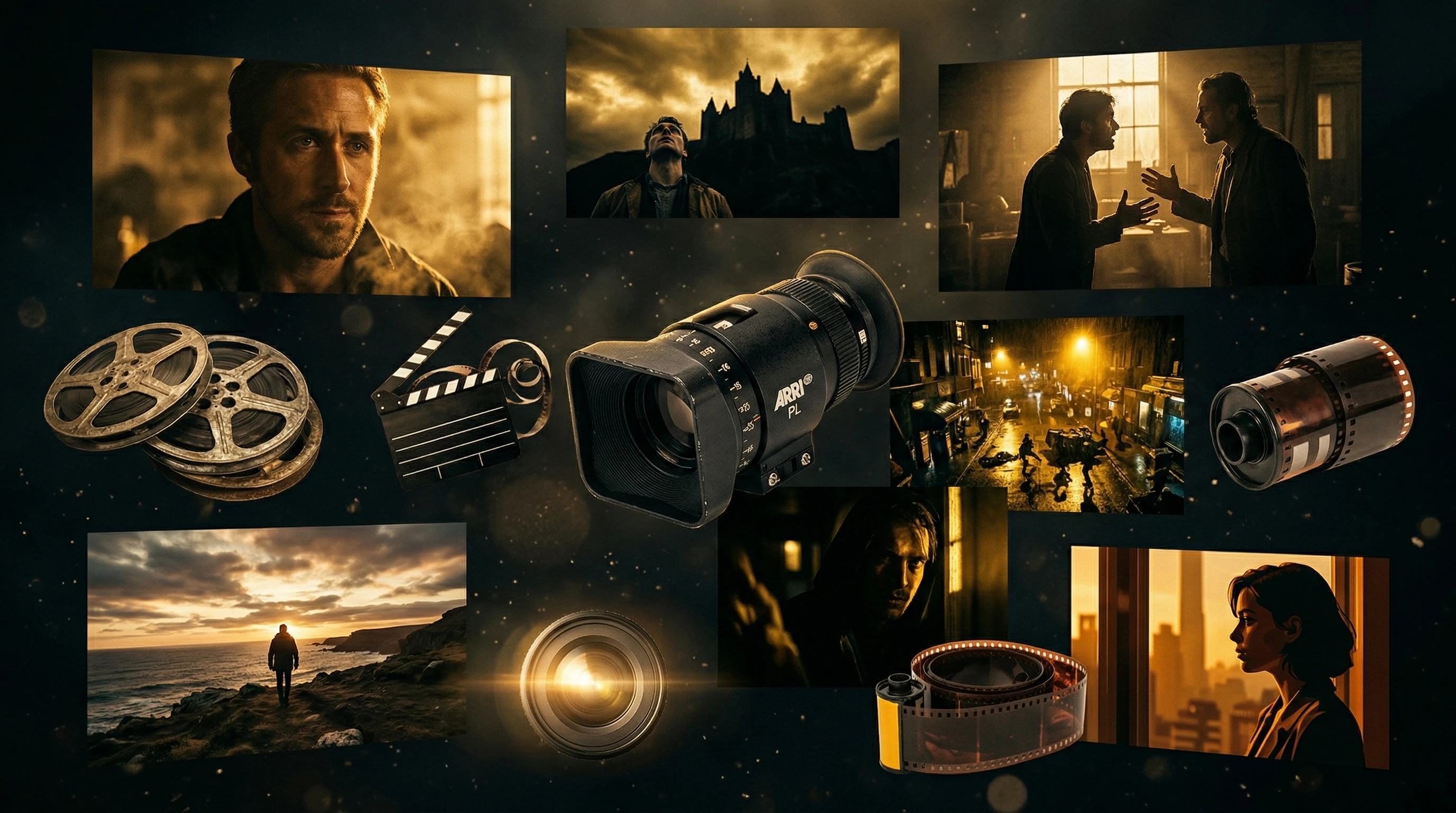
Cinematic quality is what separates AI video that looks like a demo from AI video that looks like it belongs in a real production. The difference usually comes down to prompting: specific camera direction, intentional lighting, and clear mood language.
This collection gives you 15+ ready-to-use cinematic prompts organized by genre, plus the underlying principles so you can write your own.
Every effective cinematic prompt follows this structure:
The more of these elements you specify, the more cinematic and controlled the output.
"A lone figure standing at a rain-streaked window, city lights blurred in the background, soft practical lighting from a desk lamp, slow push-in camera, warm amber tones against cool blue exterior, melancholic mood, shallow depth of field, 35mm film look, 8 seconds"
"Two silhouettes facing each other across a dimly lit warehouse, single overhead light casting harsh shadows, slow dolly forward between them, industrial grit, teal and orange color grade, thriller tension, wide anamorphic framing, 6 seconds"
"Extreme close-up of a face transitioning from shock to quiet acceptance, soft diffused light from the left, gentle focus pull, naturalistic skin tones, intimate documentary feel, slight handheld drift, 5 seconds"
"A figure walking away down a long empty corridor, symmetrical composition, fluorescent overhead lighting, slow zoom out, muted desaturated colors, loneliness and distance, 70mm wide format, 8 seconds"
"First-person perspective moving slowly through a dark forest at night, moonlight filtering through trees, branches brushing past the camera, blue-black color palette, dread and suspense, slight camera shake, 6 seconds"
"Slow 180-degree orbit around an empty chair in a dark room, single swinging lightbulb casting moving shadows, creaking atmosphere, noir aesthetic, high contrast, gradual reveal of scratches on the walls, 8 seconds"
"Low-angle tracking shot following running feet on wet asphalt, neon reflections in puddles, fast lateral movement, night urban setting, adrenaline energy, slight motion blur, warm streetlight against cold ambient, 5 seconds"
"Static overhead security camera angle of a parking garage, harsh fluorescent lighting, single car parked in frame, subtle movement in the shadows, found-footage aesthetic, slight digital noise, voyeuristic tension, 6 seconds"
"Slow tracking shot across a cluttered workshop, tools and materials in soft focus, natural window light from the right, warm documentary color grade, observational camera, peaceful productive atmosphere, 7 seconds"
"Sepia-toned street scene of a 1920s city, pedestrians in period clothing, old automobiles, diffused overcast light, slight film grain and vintage vignette, nostalgic and reverent tone, wide establishing shot, 8 seconds"
"Macro close-up of water droplets falling from a leaf in a rainforest, shallow depth of field, rich green color palette, soft diffused light, slow-motion capture, contemplative and precise, David Attenborough visual quality, 6 seconds"
"Aerial dolly shot over a sprawling cyberpunk city at night, holographic advertisements and flying vehicles, rain falling through neon light, Blade Runner atmosphere, teal and magenta color grade, grand and overwhelming scale, 8 seconds"
"Slow crane shot rising over a cliff edge to reveal an impossible floating island landscape, golden hour light, volumetric god rays through clouds, epic scale, orchestral energy, fantasy art direction, 10 seconds"
"Slow lateral tracking shot past a space station orbiting Earth, sun rising over the planet's horizon, lens flare, zero-gravity debris floating in foreground, cold blue and warm orange contrast, silent awe, IMAX scale, 8 seconds"
"A fedora-wearing figure stepping under a streetlamp on a foggy cobblestone street, high contrast black and white, hard directional light from the lamp, deep shadows, mystery and danger, static shot with slight tilt up, 6 seconds"
"Wide shot of a dusty main street at high noon, heat haze rising from the ground, two figures at opposite ends, harsh overhead sunlight, warm sandy color grade, tense stillness, Sergio Leone composition, 7 seconds"
"A glamorous figure descending a grand staircase, soft diffused key light creating a halo effect, rich warm tones, elegant slow-motion, tracking shot following descent, classic Hollywood glamour, shallow depth of field, 8 seconds"
To modify these prompts for your own scenes, here are the most effective camera movements for cinematic AI video:
Lighting language that AI models tend to respond to well:
For anime-specific prompts, see anime prompts. For landscape and nature prompts, check landscape prompts. For the general prompt formula page, visit HappyHorse prompts.
This website is an independent informational resource. These are HappyHorse-style cinematic prompt templates, not official HappyHorse prompts. Results will vary across models and generations.
FAQ
No. Different models interpret prompts differently. These templates provide a strong starting structure, but you should expect to iterate and adjust based on the specific model you are using. The cinematic language and structure transfer well; the exact visual output will vary.
No. Each prompt includes the camera movement, lighting, and mood information needed to produce a cinematic result. However, understanding basic film concepts like shot types, camera movements, and lighting styles will help you modify these prompts for your specific needs.
Most AI models produce best results in the 4-10 second range. For longer sequences, generate multiple clips and edit them together. These prompts include suggested durations that tend to work well for each scene type.
Recommended tool
Powered by Elser.ai — prompts above are transferable to most AI video tools.
Try AI Image Animator